
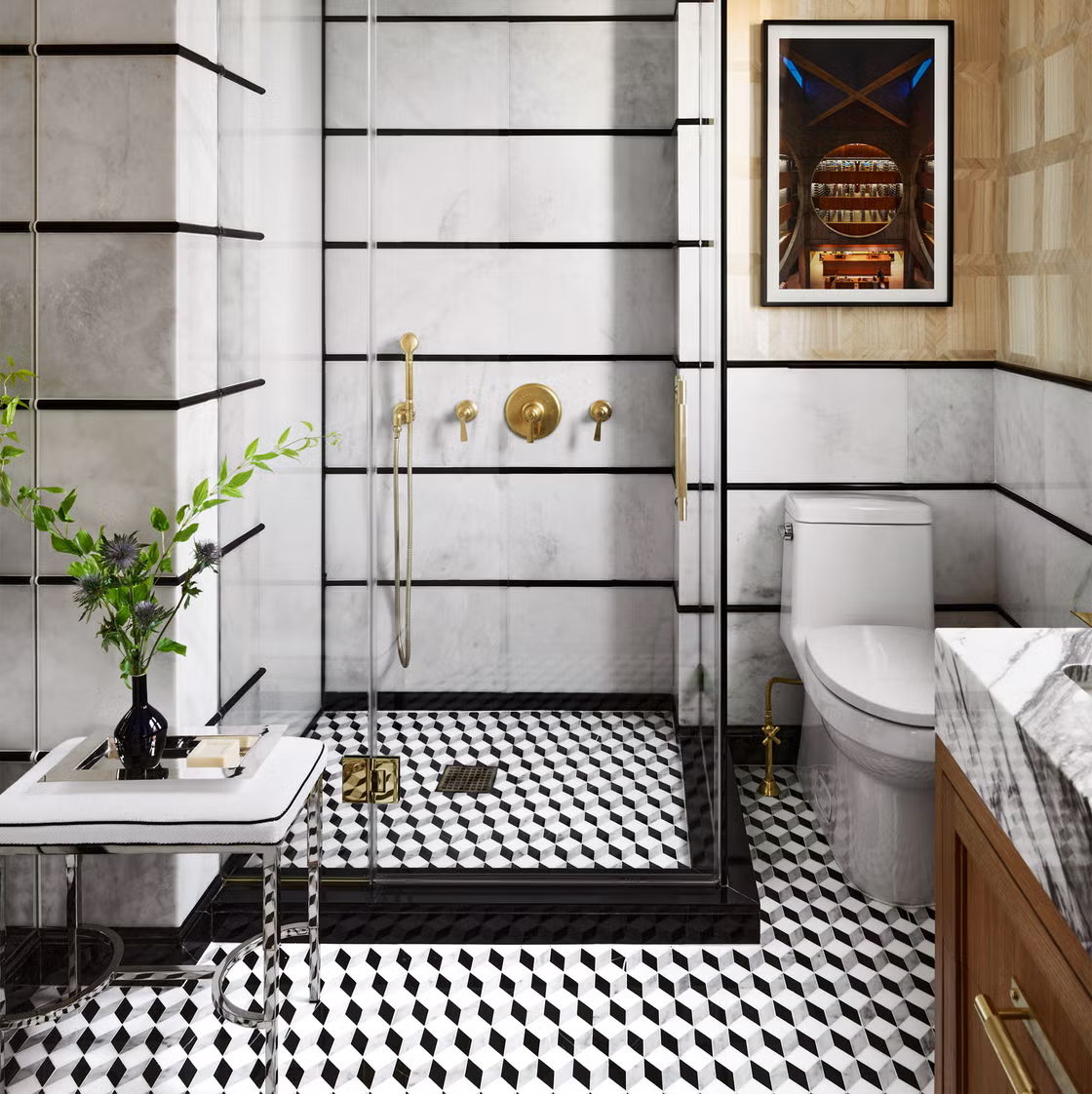
Patterned flooring can change the mood of a room before furniture, paint, or lighting enters the picture. Encaustic tile ideas work especially well when you want a floor to feel collected rather than generic, whether the pattern is geometric, floral, Mediterranean-inspired, or deliberately understated.
The trick is controlling where the pattern appears and what surrounds it. Too many competing surfaces can make even a beautiful tile feel restless.
Let the Floor Become the Main Pattern
A strong encaustic floor usually works best when nearby finishes stay quieter. Plain walls, simple cabinetry, and restrained textiles give detailed tile enough visual space to stand out.
This approach is especially useful in entryways, kitchens, bathrooms, and enclosed porches. Someone gathering wider outdoor design inspiration can use the same principle outside: one expressive surface often looks stronger than several decorative materials competing at once.
Choose Scale for the Room
Small repeating motifs can suit narrow powder rooms and compact foyers because the eye reads several repeats at once. Larger motifs tend to breathe better across open kitchens or generously sized halls.
Always look at several tiles laid together before deciding. A pattern that seems quiet on one sample can become much busier across an entire floor.
Use Pattern to Define a Functional Zone
Encaustic-style tile doesn’t need to cover a whole room. It can define the cooking zone in an open kitchen, create a rug-like rectangle beneath a dining table, or mark the transition from an entry into a living area.
That idea fits naturally with broader home layout inspiration, where changes in surface material can separate functions without adding physical walls.
| Placement | Pattern Approach | Visual Effect |
|---|---|---|
| Entryway | Medium-scale geometry | Strong first impression |
| Bathroom | Small repeating motif | Detailed, intimate feel |
| Kitchen zone | Bordered pattern | Creates definition |
| Hallway | Directional layout | Adds movement |
Borders deserve attention here. A plain perimeter tile can frame the patterned center and stop the installation from looking as though it simply ended at the wall.
Balance Color Without Making the Room Flat
Patterned tile does not require a colorful room. In fact, one of the easiest combinations is a two- or three-color tile with walls and furnishings that repeat only one of those tones.
A terracotta, cream, and charcoal floor, for example, might be paired with warm white walls and dark metal hardware. Small finishing ideas gathered from cozy interior references can then be introduced through textiles, lamps, or accessories instead of another large pattern.
Natural wood also softens graphic floors. Oak, walnut, rattan, linen, and leather can keep geometric tile from feeling overly hard or formal.
Think About Pattern Direction Before Installation
Some encaustic patterns have no obvious direction, while others create stars, diamonds, waves, or continuous lines when multiple tiles meet. Rotating even one tile can interrupt the intended rhythm.
Dry-lay several rows before installation begins. This reveals how the pattern meets doorways, cabinets, tubs, islands, or irregular walls and gives you time to adjust the starting point.
Centering isn’t always the answer. In an asymmetrical room, aligning the pattern with the most visible architectural feature may look more intentional.
Where Patterned Floors Commonly Go Wrong
The most common mistake is choosing tile from a single sample rather than judging the repeated design. Another is matching every room element to the floor’s colors, which can make the space feel overly coordinated.
Grout can also change the result. High-contrast grout emphasizes each tile edge, while a closer color match allows the overall motif to read more continuously. Pattern deserves attention, but so do the lines surrounding it.
Frequently Asked Questions
Are encaustic tiles suitable for small rooms?
Yes. Small rooms can handle strong patterns surprisingly well, especially when the walls and larger fixtures remain simple. The scale of the motif matters more than following a rule that small spaces must use plain flooring.
Should patterned tile match the wall color?
It doesn’t need to match exactly. Repeating one undertone or color from the floor usually creates enough connection while letting the walls remain quieter than the patterned surface.
Can different patterned tiles be used in adjoining rooms?
They can, but some visual connection helps. Repeating a shared color, border material, or tile shape can keep neighboring patterns from feeling unrelated.
Give the Pattern Enough Room to Work
The best encaustic floors aren’t necessarily the boldest ones. They succeed because pattern, color, grout, and surrounding materials have been considered together.
Choose the floor first when it is meant to lead the room, then let other finishes support it rather than compete for attention.