
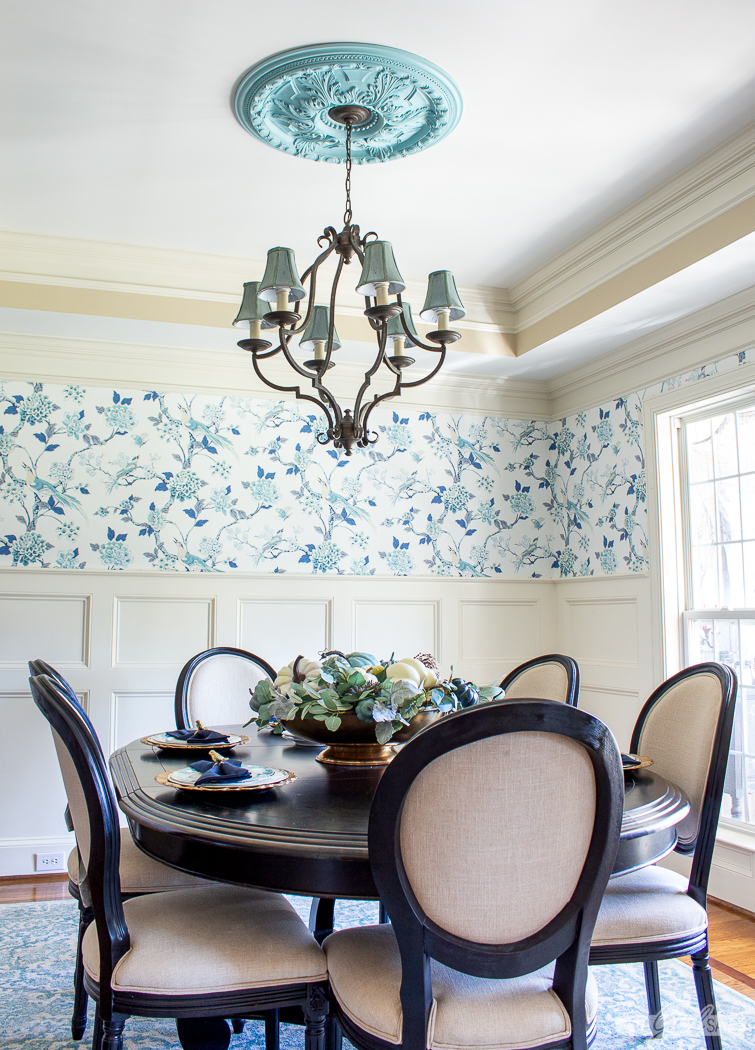
A ceiling medallion can turn an ordinary light fixture into a deliberate architectural feature. The best ceiling medallion ideas don’t depend on heavy ornament or historic interiors. Scale, shape, finish, and the relationship between the medallion and fixture matter more than decoration alone.
Used carefully, a medallion gives the eye a clear focal point while making the ceiling feel more finished.
Match the Medallion to the Fixture
Start with proportion. A tiny medallion behind a broad chandelier can look accidental, while an oversized design may visually swallow a small pendant.
Diameter should respond to both the fixture and the surrounding ceiling. In a dining room, for example, a medium chandelier often looks balanced with a medallion wide enough to remain visible beyond the fixture canopy.
Let the Fixture Lead
Decorative chandeliers can handle detailed medallions with molded leaves, rings, or repeating geometry. Simpler fixtures usually work better with flatter profiles and restrained edges.
Looking through broader home feature inspiration can also help when coordinating ceiling details with other architectural focal points. The goal is connection rather than making every feature compete for attention.
Use Style Without Making the Ceiling Busy
Traditional interiors naturally suit carved or floral patterns, but contemporary rooms can use medallions too. Clean concentric circles, shallow stepped profiles, and smooth plaster forms introduce depth without creating an antique appearance.
Paint is another useful tool. Keeping the medallion the same color as the ceiling emphasizes shadow rather than contrast, while a slightly different tone makes the form more noticeable.
Resources focused on interior design perspectives can be useful when comparing how decorative details interact with furniture, wall treatments, and lighting.
| Design Choice | Visual Effect | Works Well In |
|---|---|---|
| Smooth circular profile | Quiet definition | Modern rooms |
| Detailed floral molding | Traditional character | Formal spaces |
| Layered rings | Added depth | Transitional interiors |
| Ceiling-matched paint | Subtle texture | Small rooms |
Consider the Entire Room, Not Only the Ceiling
A medallion works best when it relates to something below it. A dining table, bed, seating arrangement, or entry console can create the visual axis that makes the ceiling detail feel purposeful.
Room architecture matters too. Crown molding, tall baseboards, paneled walls, fireplaces, and substantial door trim can support a more detailed medallion. In a stripped-back room, simpler molding often feels more natural.
Homeowners gathering ideas across indoor and outdoor projects sometimes browse residential design references alongside interior sources. Comparing different architectural features can make proportion easier to judge.
Choose Materials for the Look You Want
Traditional plaster creates crisp detail and a substantial appearance, though installation can be more involved. Lightweight polyurethane and similar molded products are easier to handle and can imitate detailed plaster surprisingly well after painting.
Wood brings warmth but creates a stronger visual statement. It suits rooms where exposed beams, cabinetry, or other wood elements already establish a material connection.
Where Ceiling Medallions Can Go Wrong
More decoration isn’t automatically better. Combining an ornate medallion, elaborate chandelier, detailed crown molding, patterned wallpaper, and decorative ceiling paint can leave the eye with nowhere to rest.
Placement also matters. A medallion should normally be centered precisely around the electrical box and fixture canopy. Even a small alignment error becomes noticeable because circular shapes make uneven spacing easy to spot.
Frequently Asked Questions
Should a ceiling medallion be larger than the light fixture?
It often looks better when part of the medallion remains visible beyond the fixture. Exact proportions depend on the chandelier or pendant size, room dimensions, and how much decorative emphasis you want overhead.
Can ceiling medallions work in modern homes?
Yes. Choose smooth profiles, geometric rings, or shallow relief instead of elaborate floral ornament. Painting the medallion the same color as the ceiling can make it feel architectural rather than decorative.
Should a ceiling medallion match crown molding?
It doesn’t need to match exactly. Similar levels of detail, comparable curves, or a shared paint finish can create enough visual connection without making every molding profile identical.
Make the Ceiling Detail Feel Intentional
A successful medallion should look like part of the room’s architecture rather than an accessory added afterward. Start with the fixture, choose a proportion that leaves breathing room around it, and keep the decorative complexity consistent with the surrounding trim. When those relationships are right, even a simple medallion can give an ordinary ceiling a much stronger sense of finish.