
A gate that drags, refuses to latch, or sits crooked usually needs attention before it needs replacement. Regular gate maintenance focuses on hinge condition, post stability, fastener tightness, and the way the latch meets its receiver. Small adjustments made early can prevent extra strain on the frame and hardware.
Start by Finding the Cause of the Sag
Don’t assume the hinges are automatically responsible. Open the gate halfway and watch the hinge-side post. If the entire post moves or leans as the gate’s weight shifts, tightening hinge screws alone won’t correct the underlying problem.
Check the gate frame for loose joints, warped boards, rusted metal, or fasteners that have backed out. Homeowners collecting broader property upkeep ideas may find it useful to keep seasonal gate checks alongside fence, deck, and exterior hardware maintenance.
Check the Diagonal
A square gate should maintain consistent diagonal measurements. A wood gate that has gradually changed shape may need its fasteners tightened or a suitable diagonal brace rather than repeated latch adjustment.
Inspect and Adjust the Hinges
Look closely for loose screws, worn hinge pins, corrosion, or movement where the hinge attaches to the gate. Tighten sound fasteners, but don’t keep tightening a screw that spins freely because the mounting material may already be damaged.
Lubricate hinge pivots with a product suitable for the hinge material and outdoor exposure. General home maintenance reading can be useful for building a broader checklist, but the gate manufacturer’s hardware guidance should take priority when special hinges are installed.
| Problem | Likely Area to Check | Practical Response |
|---|---|---|
| Gate drags | Hinges or sagging frame | Check alignment and support |
| Gate swings unevenly | Hinge pins or post | Inspect wear and movement |
| Screws loosen repeatedly | Mounting material | Repair attachment point |
| Hinge squeaks | Pivot point | Clean and lubricate |
Get the Latch Lined Up Again
A latch that misses its receiver is often a symptom rather than the original problem. First correct obvious sagging or loose hinges. Then close the gate slowly and note whether the latch sits above, below, or to one side of the strike.
Minor receiver adjustments may restore reliable closure. People who organize household projects using general home inspiration may benefit from noting the final latch position so future movement becomes easier to spot.
Protect Hardware From Weather and Wear
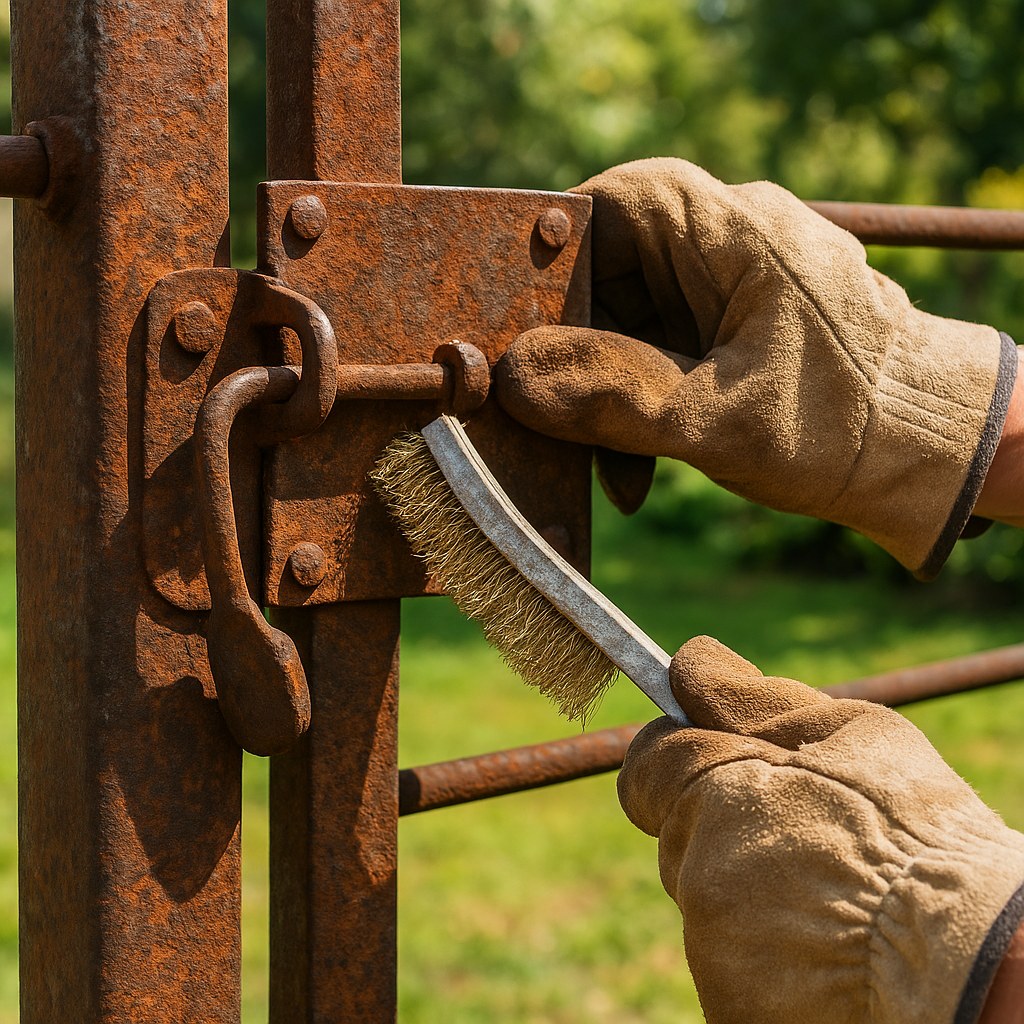
Outdoor hardware deals with rain, dust, temperature changes, and repeated impact. Remove dirt around hinge joints and latch mechanisms so grit doesn’t interfere with movement.
Replace badly corroded or bent hardware rather than trying to force it back into service. With wood gates, also look for soft material around screw locations because deteriorated wood may no longer hold hardware securely.
Mistakes That Keep a Gate Crooked
Repeatedly moving the latch downward to match a sagging gate can hide the problem for a while, but the gate may continue dropping. Another common mistake is installing larger screws without checking whether the post itself is loose or deteriorated.
Avoid forcing a dragging gate closed. That adds stress to hinges, joints, and posts. Correct the support problem first, then fine-tune the latch once the gate hangs properly.
Frequently Asked Questions
How often should gate hinges be checked?
A quick inspection every few months and after severe weather is sensible. Look for loose fasteners, rust, unusual movement, and changes in the gap around the gate rather than relying on a rigid schedule.
Can a sagging wooden gate be fixed without replacement?
Often, yes. Tightening sound connections, repairing weak attachment points, correcting hinge alignment, or adding proper bracing may help. Severe rot, extensive warping, or structural damage can make replacement more practical.
Why does my gate stop latching after winter?
Moisture, soil movement, wood expansion, frost-related ground movement, and hardware corrosion can all affect alignment. Check both the gate and its supporting posts before relocating the latch receiver.
Correct the Support Before the Hardware
A well-maintained gate should move freely without being lifted, kicked, or forced into the latch. Check the post, frame, and hinges in that order, then adjust the latch only after the gate hangs correctly. Addressing early movement usually requires far less work than waiting until several parts are strained.