
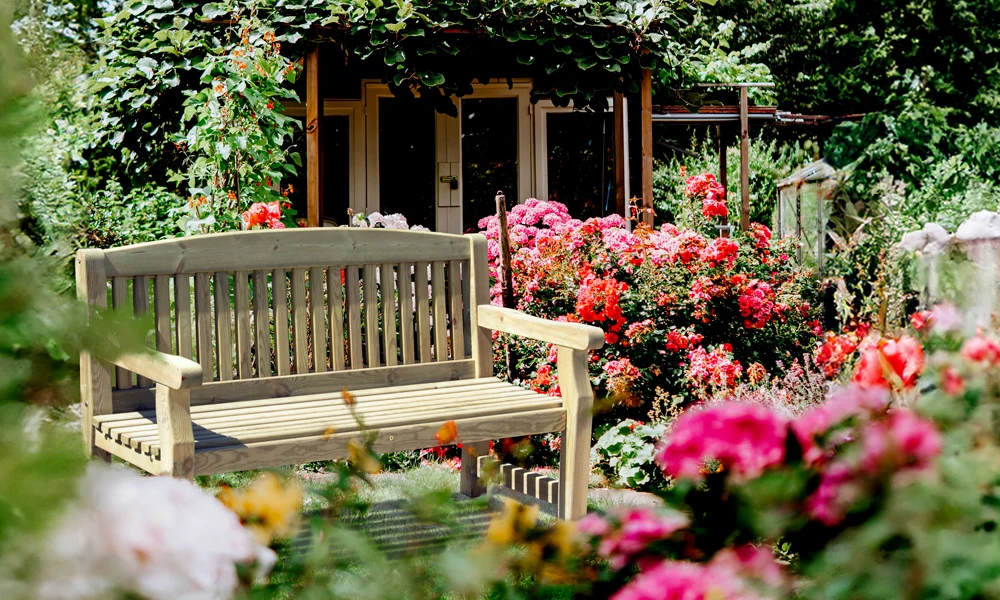
A garden bench becomes far more useful when its location feels intentional. Good garden bench placement gives you a comfortable reason to stop, notice the landscape, and enjoy parts of the yard that might otherwise be passed by.
The strongest locations balance shade, views, privacy, drainage, and easy access rather than simply filling an empty space.
Face the Bench Toward a View Worth Watching
A bench should usually look toward something interesting rather than directly at a fence or blank wall. Flower beds, mature trees, water features, lawns, and layered plantings can all create restful focal points.
Think about how the view changes through the seasons. A spot facing spring bulbs may feel empty by midsummer, while a mixed border or evergreen backdrop can provide longer visual interest. Gardeners planning areas near a pool can also borrow ideas from broader outdoor pool environments when deciding where sitting areas should face.
Use Framing to Make Small Views Better
You don’t need a large property to create a satisfying outlook. Two shrubs, an arbor, or the branches of a small tree can frame a narrow garden view and make it feel more deliberate.
Even a bench facing a single specimen plant can work if the surrounding area is calm rather than visually cluttered.
Find Shade Without Creating a Damp Corner
Afternoon shade can make a bench much more comfortable during warm months. Mature trees, pergolas, covered porches, and tall shrubs can all reduce direct sun exposure.
Yet deep shade can create problems. Areas that remain wet after rainfall may encourage moss, mud, insects, or deterioration of wooden bench legs. Ideas seen in relaxed lodge-style settings can be useful inspiration for combining sheltered seating with open surroundings.
| Placement Factor | Good Choice | Possible Problem |
|---|---|---|
| Sun | Morning light | Hot afternoon exposure |
| Ground | Firm, level base | Soft soil or mud |
| View | Garden focal point | Blank utility area |
| Shelter | Light shade | Constant dampness |
Place Benches Where People Naturally Pause
Some of the best bench locations sit along paths rather than at their final destination. A seat halfway through a larger garden gives people somewhere to pause while still feeling connected to the landscape.
Corners near raised beds, pond edges, pathway junctions, and wider sections of lawn can work well. Leave enough clearance around the bench so people can approach without stepping into planting beds.
Create Privacy Without Hiding the Bench Completely
A quiet resting spot should feel somewhat protected, but excessive screening can make it isolated or uncomfortable. Partial enclosure usually works better.
Use ornamental grasses, shrubs, trellis panels, or layered planting behind and beside the bench while leaving the forward view open. Similar principles appear throughout residential outdoor planning, where privacy and practical circulation need to work together.
A bench backed by planting often feels more secure than one placed in the middle of an exposed lawn.
What People Often Get Wrong
A common mistake is choosing the prettiest-looking empty corner without spending time there first. That corner may receive harsh afternoon sun, catch strong wind, collect water, or sit directly beside noisy equipment.
Another mistake is pushing the bench against dense plants. Give vegetation enough room to mature without covering the seat or trapping moisture against its surface. Placement should work in real daily conditions, not only in a garden photograph.
Frequently Asked Questions
Where is the best place to put a garden bench?
Choose a level location with a pleasant view, comfortable light conditions, and easy access. Partial shade and some planting behind the seat often create an especially comfortable arrangement.
Should a garden bench face the house?
It can, particularly if the home’s architecture is attractive, but it doesn’t have to. Many benches feel more restful when facing trees, flowers, lawns, ponds, or another garden feature.
What should go underneath an outdoor bench?
Gravel, stone, brick, pavers, or another firm surface can keep the bench stable and reduce mud. Avoid placing wooden legs directly on persistently wet soil.
Make the Resting Spot Feel Intentional
Before fixing a bench permanently in place, set a temporary chair there and use the location at several times of day. Notice sunlight, wind, noise, views, and how easily you reach the spot.
A successful bench doesn’t need an elaborate setting. Give it stable ground, a worthwhile outlook, and enough quiet space around it, and an overlooked section of the garden can become one of its most enjoyable places.