
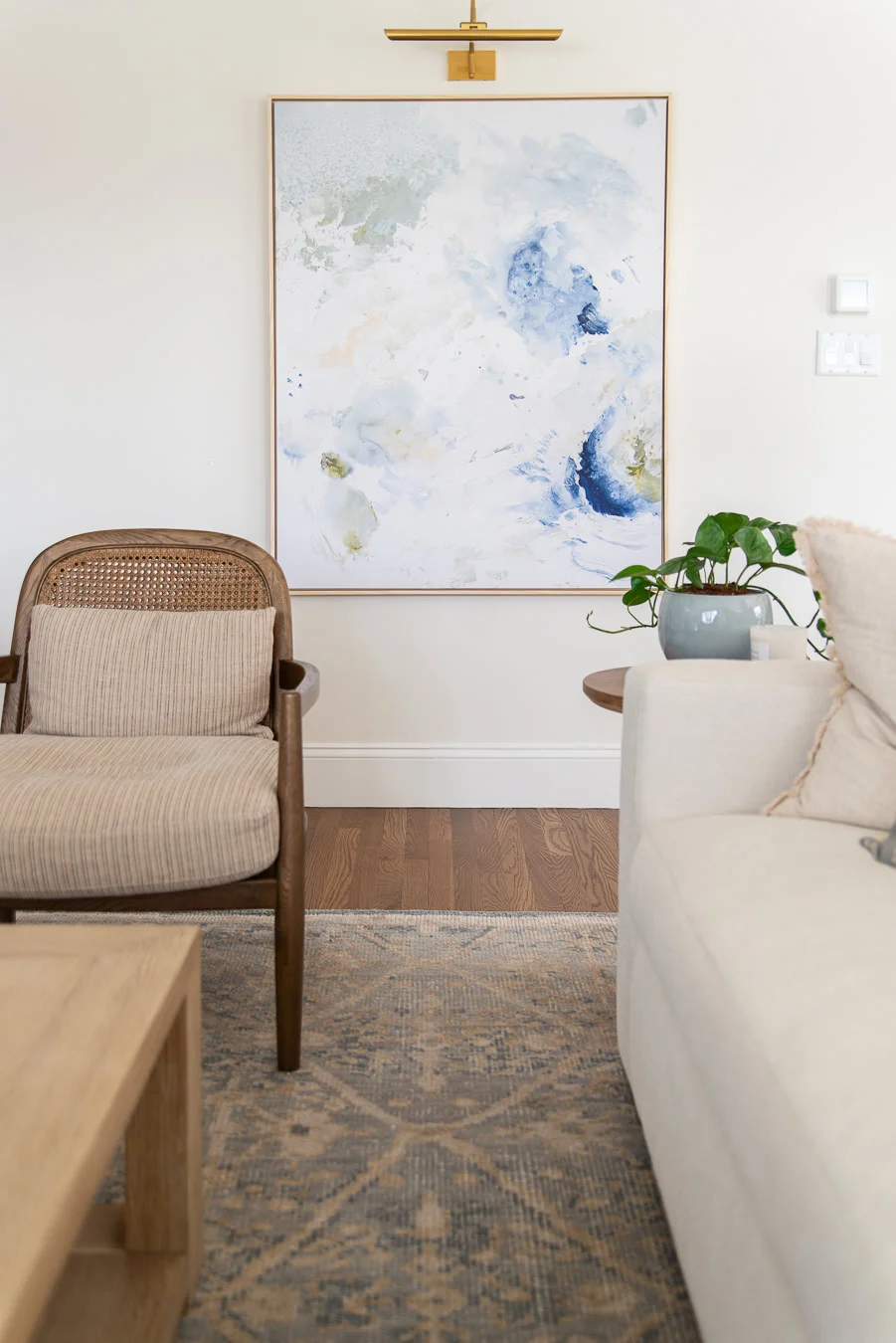
A large blank wall can make a finished room feel oddly incomplete. The right oversized artwork gives that space a focal point, adds visual weight, and can connect furniture, color, and architecture without filling every inch with decoration.
The key is scale. Large art works best when it feels related to the furniture and wall around it rather than floating alone.
Start With the Furniture Below the Art
Furniture gives you the easiest reference point for choosing art size and position. Above a sofa, console, bed, or dining bench, artwork usually looks more settled when its width relates clearly to the piece beneath it.
A tiny frame above a long sofa can make the entire wall appear larger and emptier. One oversized canvas or a tightly grouped pair creates stronger visual balance.
Let the Art Belong to the Furniture Zone
Keep enough space between the furniture and artwork for separation, but avoid hanging the piece so high that it feels disconnected. The goal is to make the wall and furniture read as one composition.
People gathering home design references can also compare how different room proportions affect the amount of visual weight a wall needs.
Use One Statement Piece on the Largest Blank Wall
A single large piece is often more effective than several small frames on a wide, uninterrupted wall. It gives the eye one clear destination and reduces visual clutter.
This approach works especially well in living rooms, bedrooms, stair landings, and dining areas where architecture already provides plenty of lines.
Think about residential styling inspiration alongside your own furniture proportions rather than choosing artwork only because the image itself is attractive.
| Placement | Useful Approach | Common Problem |
|---|---|---|
| Above sofa | Wide horizontal piece | Art looks too narrow |
| Above console | Centered statement work | Hanging too high |
| Tall wall | Vertical oversized piece | Too much empty height |
| Open wall | Large canvas or pair | Small scattered frames |
Match Art Orientation to the Wall Shape
Wall shape often tells you which direction the artwork should run. A long horizontal wall usually handles landscape-format artwork well, while narrow sections between windows or doors can support taller pieces.
You don’t need to fill the entire surface. Empty space around a large work can make it look more intentional.
Exploring broader decor perspectives may help you notice how proportion and negative space can influence a room even when the decorating styles differ.
Use Large Art to Correct Visual Imbalance
Oversized artwork isn’t only decorative. It can balance a heavy sectional, make a low ceiling feel taller, or draw attention away from an awkward stretch of empty drywall.
For example, placing a tall painting near a low media cabinet can introduce vertical movement. A panoramic piece above a broad sofa does the opposite by reinforcing width.
Consider the Viewing Distance
Artwork seen from across an open-plan room can usually handle a stronger scale than artwork viewed from a narrow hallway. Step several feet back before deciding whether a piece feels oversized enough.
Where Large Art Placement Goes Wrong
The most common mistake is choosing art according to the dimensions of the frame alone while ignoring the room. Even a large print can feel undersized when placed above a wide sectional or on a two-story wall.
Another problem is automatically centering everything on the wall. Art often looks better centered over the furniture arrangement instead. The wall may be architecturally centered, but your seating group might not be.
Avoid filling leftover gaps with unrelated small frames unless they strengthen the composition.
Frequently Asked Questions
How large should wall art be above a sofa?
It should usually feel substantial in relation to the sofa rather than occupying only a small central area. Measure the furniture first and test the artwork outline with painter’s tape before committing to a size.
Should large artwork be centered on the wall or furniture?
Centering it over the furniture is often more visually convincing. This keeps the artwork connected to the seating, bed, console, or other element that creates the room’s main visual zone.
Can oversized art work in a small room?
Yes. One confident large piece can actually make a small room feel calmer than a collection of many tiny decorations. Keep surrounding surfaces relatively simple so the artwork has breathing room.
Give the Empty Wall One Clear Job
Don’t treat a large wall as space that must be completely covered. Decide what the wall should contribute—height, width, color, contrast, or a focal point—and choose artwork that performs that job. Test the scale before hanging, then allow some blank space to remain. A well-placed oversized piece often needs less decoration around it, not more.