
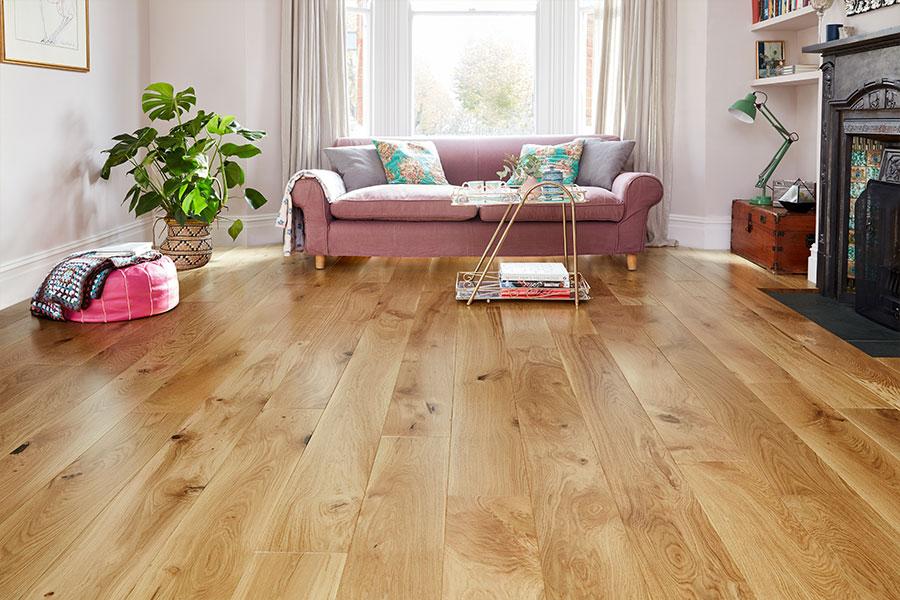
Got wood floors, but not sure if they’re real? You’re not alone. Many homeowners walk on their floors every day without knowing what’s underneath. Real hardwood matters because it adds value to your home and can be sanded and refinished many times. This means your floors can last for generations with proper care. Engineered hardwood flooring, laminate, and vinyl can look a lot like solid wood these days.
What Are the Visual Signs of Real Wood?
Real hardwood has natural variations that fake floors can’t copy. Take a close look at your floor, and you’ll notice things that manufactured floors don’t have.
- Every plank has different grain patterns, tiny knots, and color shades
- Board lengths often vary, especially in older homes
- You might spot old nail heads or wooden plugs in the surface
- Natural mineral streaks and color changes appear throughout
6 Quick Tests to Identify Real Hardwood Floors
These simple tests take a few minutes and don’t require any special tools. You can do all of them right now using your hands, eyes, and ears.
1. The Grain and Pattern Test
Here is an easy test you can do right now. Run your finger across the floor surface. Real hardwood has tiny ridges you can feel that follow the grain pattern. Laminate feels completely smooth because the wood grain is a printed picture under a plastic coating.
Walk around the room and compare different boards:
- Identical patterns appearing within 10 to 15 planks mean it’s not real wood
- Genuine wood grain is like a fingerprint, and no two pieces match exactly
- Growth rings visible at the board ends indicate solid hardwood
2. The Seams and Edges Test
Take a look at where your floorboards meet. Real hardwood has tight seams with natural wood edges. The boards connect using a tongue-and-groove system, and you can see the wood grain continue along the sides.
Here’s what to look for:
- Solid hardwood: One piece of wood all the way through
- Engineered hardwood flooring: Thin layers stacked like plywood
- Laminate: Brownish fiberboard middle with a thin picture layer
- Vinyl: Flexible plastic, sometimes with foam backing
3. The Touch Test
Your hands can help you figure this out quickly. Put your palm flat on the floor and notice how it feels. Real hardwood feels warm and dense with slight texture variations. Laminate and vinyl feel cooler and almost plastic-like because they are made from synthetic materials.
4. The Tap Test
Use your knuckles to knock on the floor or drop a coin on the surface.
- Real hardwood makes a deep, solid sound.
- Laminate and vinyl sound hollow because they float on a soft layer underneath
- Engineered hardwood flooring sounds slightly hollow, but not as much as laminate
5. The Water Drop Test
Put a tiny drop of water on a hidden spot of your floor. Real wood slowly soaks up the water and gets a bit darker at that spot. Laminate and vinyl don’t absorb water at all, so the drop sits on top like a bead. This simple test takes a few seconds to show results.
6. The Cross-Section Test
The best way to know for sure is to see what your floor looks like from the side. Remove a floor vent or lift a door threshold to get this view.
Here is what each type looks like from the edge:
- Solid hardwood: One solid piece about 3/4 inch thick with wood grain throughout
- Engineered wood: Several thin layers glued together with real wood on top
- Laminate: Thick brown fiberboard with a printed picture and clear plastic coating
- Vinyl: Bendy plastic layers, sometimes with soft foam on the bottom
Real Hardwood vs Engineered, Laminate & Vinyl
Here is a quick comparison to help you tell them apart:
Solid Hardwood:
- One piece of genuine wood all the way through
- Every board has a unique grain pattern
- Makes a solid sound when you tap it
- Can be sanded and refinished 5 to 10 times
Engineered Wood:
- Plywood base with a real wood layer on top
- Sounds slightly hollow when tapped
- Can only be refinished 1 to 3 times
Laminate:
- Fiberboard with a printed picture on top
- The same patterns repeat every few boards
- Cannot be refinished at all
Vinyl:
- Made entirely of plastic layers
- Makes a soft, muted sound when tapped
- Cannot be refinished
Real hardwood can increase your home value by 3 to 5%. If you are planning a big renovation or selling your home, a flooring expert can confirm what you have. This helps when buying wholesale hardwood flooring for repairs or getting your home appraised.
Takeaway
Finding out if your floors are real hardwood only takes a few minutes. Check the grain patterns, look at the seams and edges, try the touch and knock tests, and peek at hidden spots if you can. Once you know what type of floor you have, you can take better care of it and plan for the future.
If you’re looking for beautiful and real hardwood for your next project, Rustic Wood Floor Supply has premium solid hardwood and wholesale hardwood flooring options that make any room look amazing. With tons of wood types, finishes, and plank sizes to choose from, you’ll find the perfect match for your home.